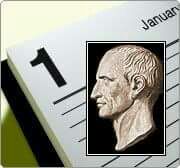
The idea of using the first day of January to mark the beginning of the new year dates back to the time of Julius Caesar, five decades before the birth of Jesus.
Many calendars existed before Caesar created the Julian calendar in 46 B.C., but his marked Jan. 1 as the official start of the new year. That was the day that the two consuls, the highest elected political officials in Rome, took office to start serving their year-long terms.
Major Holidays A History of the New Year A move from March to January
by Borgna Brunner Julius Caesar and the Gregorian Calendar
by Borgna Brunner Julius Caesar and the Gregorian Calendar
New Year’s Features New Year’s Traditions
Rosh Hashanah, Jewish New Year Chinese New Year
Muharram, Islamic New Year Saying “Happy New Year!” Around the World
The Calendar The Curious History of the Gregorian Calendar
Leap Year Explained The Ides of March
A Tale of Two Easters April Fools’ Day Explained
How August Became So August
Names of the Months Names of the Days of the Week
Calendars and Holidays Encyclopedia: Calendar
History of the Calendar The Infoplease Perpetual Calendar
The celebration of the new year on January 1st is a relatively new phenomenon. The earliest recording of a new year celebration is believed to have been in Mesopotamia, c. 2000 B.C. and was celebrated around the time of the vernal equinox, in mid-March. A variety of other dates tied to the seasons were also used by various ancient cultures. The Egyptians, Phoenicians, and Persians began their new year with the fall equinox, and the Greeks celebrated it on the winter solstice.
Rosh Hashanah, Jewish New Year Chinese New Year
Muharram, Islamic New Year Saying “Happy New Year!” Around the World
The Calendar The Curious History of the Gregorian Calendar
Leap Year Explained The Ides of March
A Tale of Two Easters April Fools’ Day Explained
How August Became So August
Names of the Months Names of the Days of the Week
Calendars and Holidays Encyclopedia: Calendar
History of the Calendar The Infoplease Perpetual Calendar
The celebration of the new year on January 1st is a relatively new phenomenon. The earliest recording of a new year celebration is believed to have been in Mesopotamia, c. 2000 B.C. and was celebrated around the time of the vernal equinox, in mid-March. A variety of other dates tied to the seasons were also used by various ancient cultures. The Egyptians, Phoenicians, and Persians began their new year with the fall equinox, and the Greeks celebrated it on the winter solstice.

 SRI RAMAKRISHNA TODAY