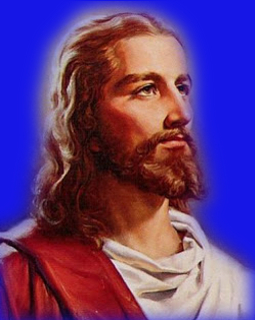
 |
| What Christ Means to Me |
What Christ Means to Me
//pagead2.googlesyndication.com/pagead/js/adsbygoogle.js
(adsbygoogle = window.adsbygoogle || []).push({});
Swami Chetanananda
Individuals regularly talk about the second coming of Christ. It is fascinating to hypothesize about what number of would perceive Christ if he somehow happened to show up tomorrow. In numerous spots in the Bible, we find that Christ uncovered his godliness to the individuals who cherished him, who were near him. Just the individuals who are straightforward and unadulterated can understand the godliness of God. It is just by God’s elegance that a lady or man can comprehend God. The Katha Upanishad says: ‘That individual whom the Atman picks achieve the Atman.’1 In the Bhagavadgita, Sri Krishna says: ‘When religion decreases and religion wins, I take a human frame. To protect the interminable religion, I come in each age.’2 The Vedantic idea of divine manifestation is that God is birthless, demise – less, and endless, yet sets aside frame from the opportunity to time. Sri Ramakrishna said that it is one and a similar God who dives into the sea of Satchidananda, at that point ascends in one place and is known as Sri Krishna; at that point, plunging once more, ascents up in somewhere else and is known as Jesus. Out of kindness, divine manifestations take a human frame to help humankind.3 When individuals are never again rehearsing genuine religion, the symbol comes. The heavenly manifestation shows genuine religion with the goal that we are propelled to play out our obligations earnestly and wholeheartedly. There are a few seabirds named the Stormy Petrels that live on the vast ocean and go to the shore just to breed. They get on a ship during a tempest, not leaving the ocean and, after its all said and done. They cherish storms; they want to battle against them. Like those seabirds, divine manifestations come to fly against Maya and the disturbance of life. The symbols do this since we require a model to demonstrate to us proper methodologies to battle our hardships. We require a heavenly manifestation to give us quality and comprehension. The encounters of the spiritualists depicted in the Upanishads demonstrate that God exists, however, individuals don’t trust this. At the point when Jesus went to visit his family in Nazareth, the villagers saw him just as the craftsman’s child. They didn’t know his identity. Who can comprehend and clarify Christ? Genuinely, no one but Christ can talk about himself; just Christ knows Christ. Acharya Shan – kara can clarify his rationality superior to some other logician. How to Know Christ? We need to take in more about Christ, however, how might we know him better? In the Gita, Sri Krishna uncovered his celestial astronomical shape to Arjuna. Arjuna was dazed and apprehensive. He had not known Sri Krishna in that way: Sri Krishna was his sidekick, his cousin, and his companion. On that war zone of Kurukshetra – try, when Sri Krishna uncovered his heavenly nature, Arjuna stated: ‘You are that incomparable Brahman; you are that preeminent reality; you are the home all; you are the asylum of all. The considerable sages and illuminated spirits talked about you, and now you talk about yourself. O Lord Krishna, you are talking about yourself, pronouncing that you are that Supreme Being. Presently I comprehend who you are.’4 Likewise, in the Bible, particularly in the Gospel of St John, we find that Christ additionally uncovered his identity on numerous events. He revealed the motivation behind his going to the world, his connection to the superb Father, and his redemptive relation to people. He stated: ‘I came to provide a reason to feel ambiguous about flame the earth; and what do I want, on the off chance that it is al-prepared kindled?’5 He implied that the blasting flame can’t be shrouded; it will show without anyone else. The otherworldly attraction of the celestial symbol can’t be fixed up; it can’t be covered up. Christ stated: ‘I have come to cast fire.’ What kind of flame? The light of awareness. He conveyed that light to people with the goal that they can dispose of ignorance, which is the reason for all torment and enduring. Be that as it may, most people in this world would prefer not to be freed of obliviousness; they are snared with their common attachments. At the point when a perfect manifestation, for example, Christ goes to the world, a great many people despise him, assault him, and misjudge him. Finally, they torment him since he is uncovering the way of light—the way of God. Christ stated: ‘I am the way, reality, and the life, and nobody goes to the Father yet by me. In the event that you had known me, you would have known my Father too. From now on you know him and have seen him; I and my Father are one.’6 If you know the manifestation of God, you know God. This is a huge message from a Vedantic point of view: ‘I and my Father are one.’ In Sanskrit we call it ‘Aham brahmasmi; I am Brahman’— unquestionably the unceasing Godhead. Christ is a symbol, an awesome manifestation—God who took the human frame to serve hu – humankind. Christ is the friend in need of spirits, yet who needs to be spared? Sri Krishna disclosed to Arjuna that there are four sorts of individuals who look for God: Those who are burdened, the individuals who are interested, the individuals who have wanted for riches, and the individuals who are incredible darlings. 7 These four kinds of individuals look for God, yet God is accessible just to the individuals who are persuaded by adoration. God satisfies the wants of individuals as indicated by their own particular karma. Now and again I picture Christ doing his awesome play: I envision him looking out for the side – stroll outside a congregation. At the point when the administration is finished, Christ gets out: ‘Tail me!’ what number would answer that call? The legitimate individual would state: ‘Ruler, I am not prepared. I have a few responsibilities. I need to satisfy a few wants. If it’s not too much trouble excuse me. I can’t answer your call at this moment.’ The common individual, who has a figuring mind, would ask: ‘Master, what will I gain by following you?’ Such a man is utilitarian and needs to know: ‘Will I get another auto, a great job, a wonderful companion, a major home? Will I get every one of these things by tailing you?’ Our brains are terrestrial. We are common individuals, and we assess everything by methods for our common belonging. Christ may react: ‘I will give you eternal life.’ The common individual could counter: ‘I will get that after death, so you require not to guarantee it at the present time.’ ‘Well, one who tails me will not stroll in darkness.”Lord, I am good. I have two eyes. I see all around ok. I am not falling; I am not stumbling.”First, look for the kingdom of paradise and everything will be included unto you.’ The questioning individual would not trust Christ. Such a man would think Jesus is attempting to deceive one: Perhaps he needs to pull in individuals with deluding words. We don’t hear the call of Christ in light of the fact that our brains are engaged on the planet. We are hard of hearing, so we don’t answer the call of Christ. Religion, as lectured by Christ, is unadulterated, simple, inspiring, and brimming with adoration. The first religion of Jesus was the religion of genuine Christianity. It had no creed, no doctrine, and no theology. It was a religion of the heart, a religion with no function, without custom, without ministry. It did not depend on any book, but rather upon the vibe ings of the heart, upon the coordinate fellowship of the individual soul with the eminent Father. That is the manner in which we take a gander at the religion of Christ. The Jewish religious custom that went before it was doomed, bound by the numerous laws of Moses. At the point when religion is bound by excessively numerous laws, customs, and ceremonies, it doesn’t function appropriately or inhale uninhibitedly. Jesus came and evacuated those carriers with the goal that individuals could inhale the freshness of the everlasting—that is the magnificence of his religion. Be that as it may, in time, precepts, doctrines, and ideologies entered Christ’s lessons, and those bound the Christian religion. It is astounding how religion turns out to be free and again winds up bound. Spiritualists make religion free, however, determined independently from anyone else intrigue, ministers, and legislators make religion-bound. This is the issue of every sorted out religion. Once, in the US, a Christian said to Swami Vivekananda: ‘If pastors quit lecturing hellfire fire, they will have no power over their people.’8 Swamiji answered: ‘They would do well to lose it at that point. The man who is unnerved into religion has no religion by any stretch of the imagination. Better show him of his perfect nature than of his creature’ (ibid.).Sin and Purity In Vedanta, the genuine idea of people is the Atman, which is immaculate. Vedanta concedes the principle of karma: whatever a man sows that will the individual additionally harvest. Individuals make mistakes, and they can rectify them. Once a famous Dominican priest in Europe, a sacred man, questioned the legitimacy of the Christian regulation of unique sin, and all of Christendom was shaken. These days, a few Christians view sin as obliviousness. Does it assist anybody with thinking, day and night: ‘I am a miscreant, I am wrongdoing – ner?’ If a man thinks constantly, ‘I am sick I am debilitated’, she or he will wind up wiped out. Rather, say: ‘I am the Atman, birthless, deathless, immortal. I am that Self. I am divine on the grounds that my exceptional nature is divine.’ Christ is the exemplification of virtue, renunciation, and love. Who is unadulterated? That individual who is free from wants. Did Christ have any wants? He had no longing for himself. His life was completely committed to conveying great to mankind. Christ stated: ‘Favored are unadulterated in heart, for they will see God.’9 We have rehashed this sentence for the last two thousand years, however despite everything we don’t comprehend it. The Upanishads train that the psyche is of two sorts: unadulterated and unclean. The polluted personality is had of want and the unadulterated personality is without want. It is without a doubt the mind that is the reason for human servitude and liberation. The mind that is appended to detect objects prompts our subjugation and the unattached personality prompts liberation.Spiritual attraction starts with purity. In a few places in the Bible, we read that the huge number took after Jesus. Why? Since individuals couldn’t avoid his profound fascination. Christ was unadulterated, and they were constrained without wanting to tail him. This level of profound attraction originates from virtue, and this immaculateness is indestructible.There is a spectacular story concerning Buddha. He was pure to the point that individuals moved toward becoming illuminated just by observing his face. Thus, desirous ministers needed to execute him. They went to the Buddha and stated: ‘Master, we are looking
//pagead2.googlesyndication.com/pagead/js/adsbygoogle.js
(adsbygoogle = window.adsbygoogle || []).push({});

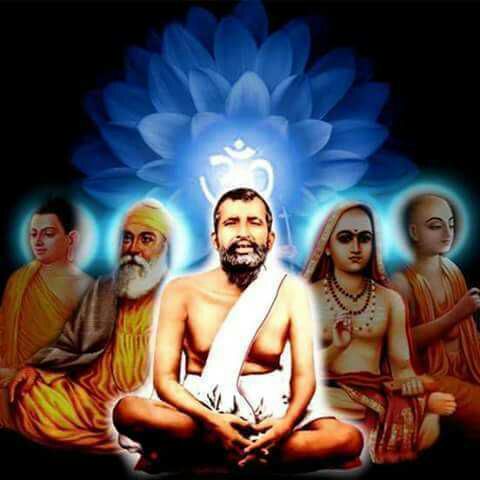

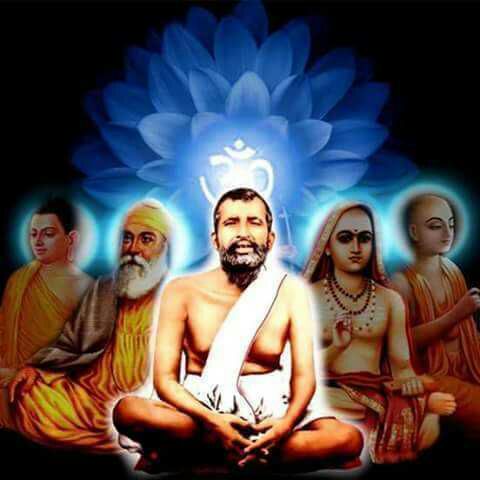

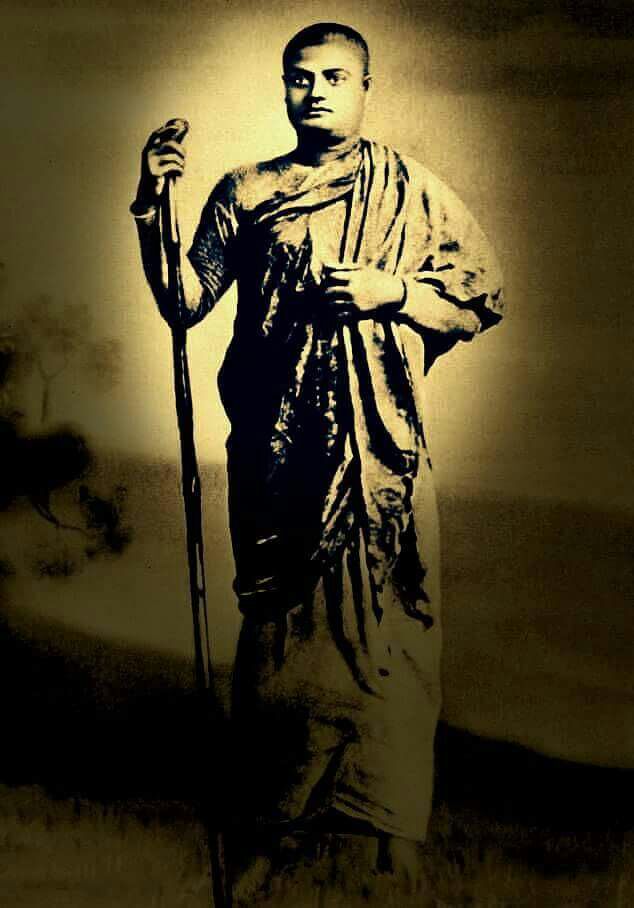



 SRI RAMAKRISHNA TODAY